


When hiring furniture for an event in London, the material is easy to overlook. A chair may be chosen for its colour and shape, while a coffee table is selected for its overall appearance. But furniture used at events has to do more than look appealing. It needs to withstand handling, transport, repeated use, cleaning and, in some cases, changing weather conditions. At Eco Furniture Hire, we provide furniture for weddings, corporate events, exhibitions and other occasions, with options ranging from timber and metal seating to rattan lounge furniture and upholstered pieces.
For customers arranging wedding chairs hire or looking at coffee table hire in London, understanding what those materials actually mean can make it easier to choose furniture that suits both the event and the venue.
So, rather than asking which material is best, it is more useful to ask what each material is designed to do.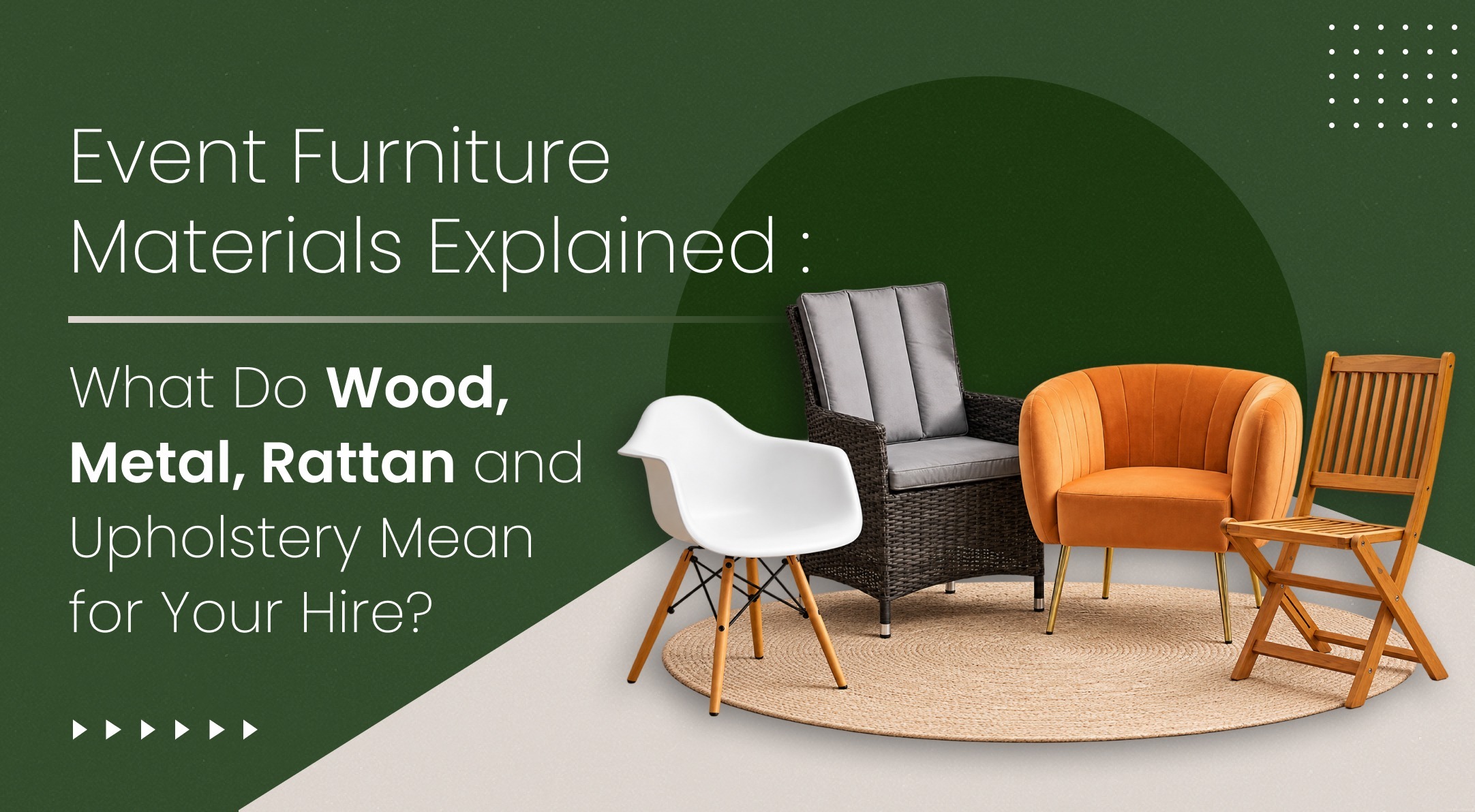
Why Material Matters More When Furniture Is Hired
Furniture for hire has a different working life from a piece bought for permanent use. It may be loaded into a vehicle, carried into a venue, positioned and repositioned, used by hundreds of guests, and collected and cleaned before being returned to storage.
That repeated cycle makes durability and maintenance particularly important. Material also affects practical considerations such as weight, stacking, weather resistance, comfort, and the type of finish a piece can carry. For an event organiser, these details may not be immediately visible, but they can make a significant difference to how suitable a particular item is.
Sustainability also needs to be considered in this wider context. We cannot judge a material in isolation simply because it is natural, recycled, or synthetic. Instead, it is more sensible to consider the environmental impact of event furniture more broadly, including the origin of materials, durability, potential for maintenance or repair, and how many times the furniture can be reused.
Wood: Warmth, Character and Responsible Sourcing
Wood brings qualities to event furniture that are difficult to replicate with other materials. Its natural grain and variations in colour can give a setting a warmer, more tactile appearance, which is particularly useful for weddings and events where the furniture forms part of the overall aesthetic.
A limewash Chiavari chair, for example, uses its finish to create a softer, lighter appearance than a more traditional dark or painted chair. The underlying timber and the finish work together, so the choice is not simply about colour.
For hired furniture, however, the timber itself is only part of the consideration. The quality of construction, finish, maintenance and sourcing all influence how suitable it is for repeated use. Responsible sourcing is also more meaningful when it can be substantiated. FSC certification, for example, provides a system for tracing certified forest products through the supply chain.
It is therefore more informative than simply describing timber as “eco-friendly”.
For anyone comparing wooden furniture, useful questions include where the timber comes from, whether it is certified or reclaimed, how the finish is maintained and whether the furniture is designed to remain in use over many events.
Metal: Strength, Structure and Practical Handling
Metal is often selected for event furniture because it can provide a strong structural framework without bulky construction.
Steel and aluminium are both common, but they are not interchangeable. Their characteristics can make them suitable for different applications.
Eco Furniture Hire‘s Samsonite-style folding chairs, for example, combine a steel frame with polypropylene seating and backs. The combination illustrates an important point: commercial furniture does not necessarily rely on one material throughout. Different materials can perform different functions within the same piece.
Steel can provide the structural strength needed for repeated handling and stacking, while other materials can contribute to comfort, cleanability or weight reduction.
Aluminium is also commonly used in outdoor and lounge furniture for hire in London because of its combination of strength and relatively low weight, particularly where furniture needs to be moved regularly. The finish matters too. Powder-coated metal, for instance, provides a durable surface finish, while outdoor furniture needs to be considered in relation to moisture and exposure to the elements.
Rattan: Look Beyond the Weave
“Rattan furniture” can sound like a description of one material, but hired rattan furniture is often a combination of several.
Take a typical rattan lounge set. The visible woven surface may be PE rattan, while the supporting structure can be powder-coated aluminium. Cushions may use polyester covers with polyurethane foam, and a coffee table may incorporate a tempered glass top. Each component has a different role.
The synthetic rattan often used for outdoor furniture creates an interwoven look. The frame is aluminium and forms the base structure, while the cushions provide cosy comfort. A glass tabletop provides a practical, smooth surface for the table.
This is why looking beyond the visible finish is worthwhile when arranging coffee table hire or lounge furniture. The appearance may be the first thing you notice, but the construction determines how the furniture behaves in use.
It is also worth distinguishing PE rattan from natural rattan. The two may create a similar visual effect, but they are made of different materials with distinct characteristics. Assuming that every “rattan” product is made from natural plant fibre can therefore lead to the wrong expectations.
Upholstery: Comfort Comes With More to Consider
Upholstered furniture introduces another layer of material considerations because the finished piece may contain several components: an outer fabric, an internal filling, and a supporting frame. For guests, the immediate benefit is comfort. For the hire company and venue, however, upholstery also raises questions about cleaning, wear, moisture, maintenance, and storage. The material used for a cushion cover does not, by itself, tell you everything about how the finished piece will perform. The construction and filling matter too.
Fire safety is another consideration. Where a venue has particular requirements for upholstered furniture or furnishings, event organisers should ask the hire company for the relevant information rather than assume that a particular fabric or foam specification automatically indicates compliance.
This is especially important because fire safety requirements can depend on the furniture, its use, and the type of premises involved.
A well-made piece of furniture that remains in circulation for years can have a very different environmental story from a cheaper item that needs frequent replacement. This approach is one of the advantages of considering sustainability through the whole hiring lifecycle, rather than judging a piece of furniture by a single material label.
What Should You Ask Before Hiring Event Furniture?
The right questions will depend on the event, but a reputable hire supplier should be able to provide useful information about the furniture they supply.
- Is it suitable for the venue and setting?
Outdoor furniture must be well-designed to withstand moisture and exposure, while indoor venues may have different requirements regarding flooring, access, and fire safety. - How should it be maintained or cleaned?
This matters particularly for upholstered furniture, timber finishes and glass surfaces. - Are there any relevant fire-safety requirements?
If your venue has specific requirements, ask the supplier what documentation or product information is available rather than making assumptions based on the material alone. - Where does the timber come from?
If sustainability is important to your event, ask whether timber is certified, reclaimed or sourced through a recognised responsible forestry system. - How is the furniture kept in use?
A hire company’s approach to maintenance, repair, refurbishment and replacement can tell you considerably more about the practical sustainability of its furniture than a generic environmental claim.